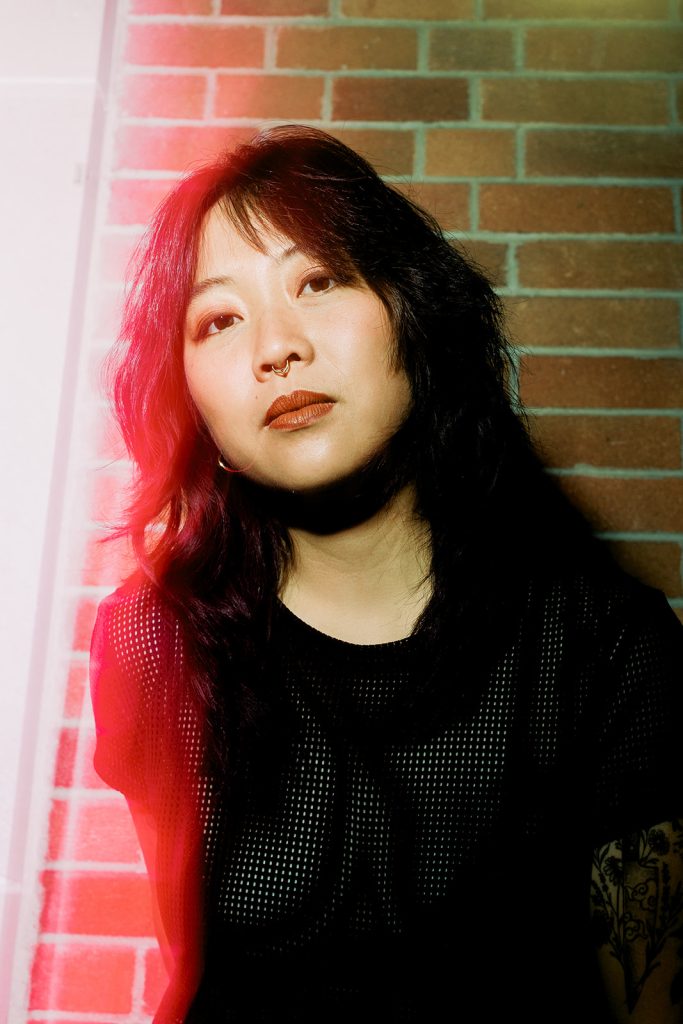
(Originally published at The Media Co-op.)
Jody Chan is a poet, care worker, and organizer based in Toronto. They won the 2021 Trillium Award for Poetry and have published multiple books, including the forthcoming the madness belongs to the people (Brick Books, 2026). They got their start in grassroots political work in the student fossil fuel divestment movement and went on to deepen their politics through involvement in mutual aid and disability justice contexts. These days, most of their organizing focuses on collaborating with other writers and artists to build a cultural front in support of Palestinian liberation: they are part of Toronto Writers Against the War on Gaza and CanLit Responds, which are two components of the No Arms in the Arts campaign. They also have a keen interest in health and healing justice, and are a member of the Toronto Street Medics and the Movement Care Collective.
The Media Co-op: What are a couple of important things you’ve learned from struggles that you’ve never been personally involved in, and why are those things important?
Jody Chan: Recently, I’ve been thinking a lot about Grace Lee Boggs’ injunction that “we must transform ourselves to transform the world.” In Grace’s hands, this statement is hard-earned and profound, coming out of decades of active engagement with many modes of organization, including early collaborations with CLR James and Trotskyist and Marxist formations, and intergenerational community projects in Detroit later on in her life — not a neoliberal self-care-lite adage, co-opted to bypass the gritty, grinding work of movement-building.
What do we practice in our interpersonal relationships to be of better service to collective political struggle if, as Grace teaches us, movements are about “critical connections rather than critical mass”? I just read the Pinko Collective’s new oral history/critical genealogy After Accountability, which delves into the lineages of various accountability practices — including oft-maligned encounters with Maoist criticism/self-criticism — from New Communist movements of the 1970s to abolitionist/transformative justice organizations of the 2000s, like Critical Resistance and INCITE!. After Accountability asks not only where these practices came from and how they evolved, but what they might have to offer movements right now.
I’ve been a part of many informal/ad hoc efforts around crisis response, mutual aid, and community conflict, and I’ve also seen many organizing spaces fall apart because of deep interpersonal conflict. I’m learning how critical it is that we grow our capacity for political disagreement and prioritize shared political objectives as a basis for addressing interpersonal ruptures, so that we can keep moving forward and building power together.
TMC: What are a couple of sources related to struggles that you’ve never been involved in that you’ve found to be particularly useful or important?
JC: A (very partial) list of books and resources that have been foundational to my own political development over the past decade, and my understanding of what it means to build structural and cultural power, without abandoning each other in the process:
- Organization Means Commitment — Grace Lee Boggs
- Health Communism— Artie Vierkant and Beatrice Adler-Bolton
- Blood In My Eye — George Jackson
- Wretched of the Earth — Frantz Fanon
- Abolition Geography— Ruth Wilson Gilmore
- In Pursuit of Revolutionary Love— Joy James
TMC: What are a couple of key things about struggles that you are (or have been) involved in, or about your approach to activism and organizing, that you would like other people to know more about?
JC: As an organizer with No Arms In The Arts since it launched in March 2024, my comrades and fellow organizers — and, most importantly, Palestinian prisoners and resistance fighters on the ground — have reminded me of the importance of focusing on material power over representative solidarity: that it is the collective work of sustaining campaigns against strategic targets with tangible demands over an extended amount of time, not the individual work of expression, that gains us any ground against the fascist and colonialist systems we live in.
This feels especially important now as we enter a stage of the genocide where certain artists in the imperial core take opportunities to grift and career-build off of name-dropping Palestinian solidarity from podiums and stages — the very artists who have hidden behind a tepid ‘politics of witness,’ who have not taken on any material sacrifices or risks, from the bare minimum of joining a boycott of Zionist cultural institutions to taking direct action against state infrastructure enabling Israel’s genocide. Not to see artists as a special class of people particularly suited to offering political or ethical guidance, because of the micro-celebrity we may accrue in the cultural marketplace (in fact, our work is always at risk of capture and co-optation exactly because of that), but as a base to be organized, like any other.
TMC: Granting that it isn’t as important as sustained, collective campaigns that exert material power, what roles do you think expressive, creative work — musical, artistic, cultural, intellectual, written — can play in the broader context of collective struggles for justice and liberation?
JC: I want to get this line (from an interview Fargo Tbakhi did with Lauren Abunassar) printed on a t-shirt: “I cannot genuinely say I believe that my writing and publishing a book with a small press based in the U.S. is an act of resistance.”
At the same time, even if culture alone isn’t inherently liberatory or revolutionary (in the context of being an artist living and working in the imperial core), it is still an important weapon. There’s a famous George Orwell quote — “All art is propaganda… on the other hand, not all propaganda is art” — and a really interesting podcast by the same name which delves into the history of the CIA’s Cold War efforts to weaponize culture against communism and Black radicalism.
Another example: Brand Israel is a PR campaign run by the Zionist entity to launder its image as a Western liberal democracy, providing cover for its ongoing genocide and occupation in Palestine.
Maybe a better way to say it is that cultural production is necessary but insufficient. We can’t cede it as a front of struggle. I also think creative work can be a form of care work; of nurturing the courage, clarity, discipline, faith, relationships, resolve that people fighting daily against violent and degrading systems need to keep going.
TMC: What are a couple of sources related to struggles that you are involved in, or to your approach to activism and organizing, that you would want other people to read/watch/listen to/learn from?
JC:
- I co-wrote this Briarpatch piece with dear comrade and fellow No Arms in the Arts organizer Aliya Pabani, on fighting Zionism in the arts, building power with artists and cultural workers, and understanding cultural boycotts as labour actions. You can follow No Arms in the Arts and sign up for our mailing list here.
- In November 2023, protesters disrupted the Giller Prize ceremony broadcast to draw attention to the prize’s main sponsor, Scotiabank, and its $500 million stake in Elbit Systems. Five people were arrested and charged in relation to the disruption on the night and up to 10 months afterward. The final arrestee, Rachelle Friesen, only had her charges dropped in September 2025. She shares a statement in Lit Hub on her experience of criminalization and police harassment, and urges cultural workers to remain steadfast in our organizing, including joining the ongoing Giller boycott. “Fear is normal, but fear cannot hold us back. With Palestine as our compass, we must take action.”
- Perfect Victims by Mohammed El-Kurd, On Zionist Literature by Ghassan Kanafani, and “Notes on Craft: Writing in the Hour of Genocide” by Fargo Tbakhi are resources I’ve turned to and cited often, thinking about how to maintain an internationalist and historical approach to cultural front organizing, how to remain rigorous in our analysis of the material impacts of our art, how to resist capture in the rhetorical traps of appeal and state recognition that seek to contain Palestinian resistance.