(Originally published at The Media Co-op.)
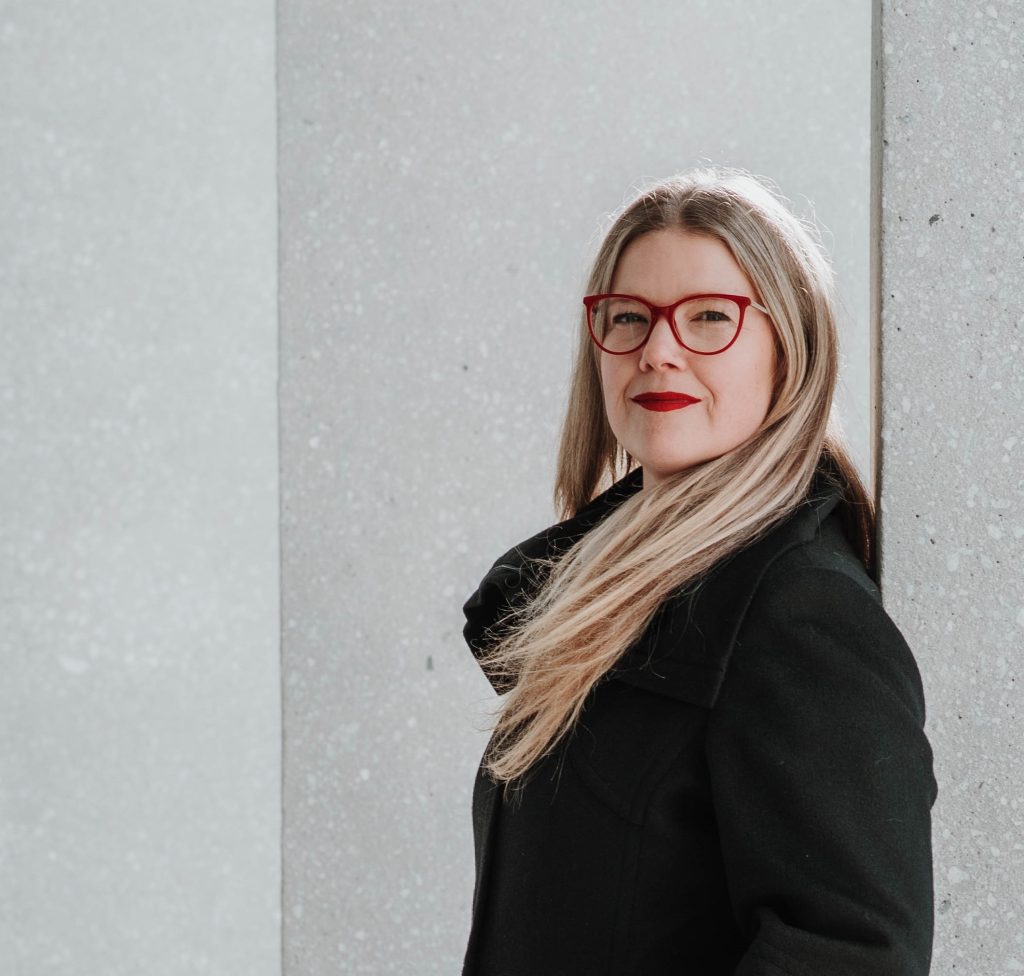
Martha Paynter is a nurse, a writer, and an academic based in New Brunswick. Her participation in grassroots political work began when she was in her teens and twenties, with a focus on reproductive rights. In those years, she fundraised for legal efforts in defense of abortion rights, escorted patients at the Morgentaler Clinic in Fredericton, and planned other sorts of grassroots actions. It was very much “small city organizing,” she says. “[We were] getting people together, making events happen, organizing demonstrations, that kind of thing.” Later, she became the chair of the Women’s Legal Education and Action Fund (LEAF) in Halifax.
A major shift in Paynter’s work took place when she became aware of the case of Julie Bilotta, who was forced to give birth unattended while incarcerated in the Ottawa-Carleton detention centre in 2012. She realized how little attention many feminist activists pay to the experiences of prisoners. From then on, she said, both her grassroots and her scholarly work has taken up “this constant intersection between reproductive rights – the rights of the body – and the rights of the person in the context of incarceration. To me, that connection was very intuitive and very raw and clear, once I was inside the prison system and engaging with people experiencing incarceration.”
Among other things, Paynter co-founded an organization to offer doula services and other supports to prisoners in Halifax and to prioritize “full-spectrum reproductive healthcare and reproductive justice, prison abolition, and health equity,” according to its website.
In her work as an academic, she has contributed to filling the significant gap in research on sexual and reproductive health in prisons in Canada. And in the context of this work at the nexus of reproductive justice and prisoner justice, she has been part of initiatives challenging healthcare professionals and mainstream pro-choice advocates to take up abolitionist politics.
Her latest book is Lawless: Abortion under Complete Decriminalization (Fernwood, 2025), which outlines the significance of Canada being the only country to completely decriminalize abortion, the importance of maintaining that legal status, and the ongoing challenges to abortion access in this country.
The Media Co-op: What are a couple of important things that you’ve learned from struggles that you’ve never been personally involved in yourself? And why are those things that you’ve learned important to you?
Martha Paynter: I’ve never been imprisoned. And I can see very clearly how it’s very much an example of a “there but for the grace of God go I” kind of situation. There’s very little that separates me, other than extreme unearned privilege, from consequences that would include imprisonment. We all do things that are wrong, all the time, whether it’s a speeding ticket, or acts of aggression, or whatever. We are very human. We are very faulty as a species and we make mistakes all the time, and somehow my mistakes have never resulted in my criminalization, and that is because of my privilege.
I see very clearly the consequences once you cross over into that realm of criminalization – how excruciatingly unfair the experience is, of imprisonment. It’s really just supposed to be the denial of liberty, but it’s actually the denial of your health, of your body, of your family, of your sanity, of your self-worth. So it, institutionally, goes far beyond what its intended purpose is. And I’ve learned from this work and from the people who do this work from a much closer, first voice perspective, how much patience and strength is required to tolerate being in this muck long enough to make some change.
TMC: What are a couple of sources related to struggles that you’ve never been involved in yourself, that you’ve found to be particularly useful or important?
MP: All of my research portfolio now is very connected with having team members on my research team who are formerly incarcerated people. So, literally having their perspectives on a very frequent basis as paid members of the team is pretty critical to making sure that this work remains relevant and asking the right questions, leading to findings that have some on-the-ground importance to people and are translatable into useful ends.
And similarly with patients, right? There’s something that is just so compelling about the patient who experiences an abortion – that patient takes on, in their body, all of the physical harm, all of the social stigma, all of the emotional burden and moral responsibility of an abortion, of an unintended pregnancy that was caused by two people. It’s such an incredibly sexed and gendered burden. And, you know, it hurts and patients cry. And that’s a really raw and basic, fundamental source of where I get the energy and the perspective to do this work, that we have set things up institutionally and socially to so deeply harm women and people with a uterus, and so completely absolve the people who cause unintended pregnancies from any responsibility. I find that very raw and core and informing. And, you know, I guess those are the core threads – those perspectives, those voices, those bodies that inform what is important and prioritized.
For both abortion and prisoner health, we’ve allowed as a society for these voices to be extremely invisiblized. This is a thing that we do on purpose with our tax dollars. We incarcerate people, we hide them away, we harm them. It’s something we are complicit in all the time, every day, as people in Canada who, you know, file our taxes. So we have responsibility to understand what incarceration is and does, to put ourselves in the shoes of someone experiencing this loss of liberty, to have compassion and to see those connections between us, because, really, there isn’t much that that separates us.
And similarly, with abortion, one in three people with a uterus in Canada has an abortion. It’s extremely, extremely common, and yet it has somehow managed to be this very stigmatized and secret experience. It’s the most common outpatient procedure, period, and yet it is this secret. So we’re not separate from that either. Either we had one, or our sister did, or our best friend did. It’s very close to us. And I also think we have a responsibility to see that as normal, recognize that as normal, talk about that as normal. Because it is. And not to be afraid of what is a very safe procedure, a very common procedure, and a perfectly legal and free procedure.
TMC: How would you recommend that people who aren’t able to have these conversations as part of their work go about learning from the experiences of incarcerated people and people who have had abortions?
MP: I can see how that can be kind of daunting. We do have many organizations across Canada that are very dedicated to prisoner rights and reproductive rights for prisoners. Elizabeth Fry Societies, for example, have events and members of the public can participate in those kind of things. I think that’s a way to start – to show up to these community organizations, where everybody working there is underpaid and everybody shares the same abolitionist ethos. At the bare minimum, we can show up for their events, their fundraisers, their letter writing campaigns. We might think it doesn’t mean anything, to share something on social media, but that is the currency of our time. And when that’s what you can do, then that’s something. And it does change the content, and the algorithm, and the words and ideas that your community are getting exposed to. So, seeking out those local voices and organizations.
Also, seeing the connections between these different pieces, right? So just as I see this very deep connection between the bodily autonomy that underscores reproductive justice – I see that as the fundamental principle that is violated in the prison system. And there are all of these connections, right? We can see the same kind of connection to Palestinian liberation, and how Palestinian liberation is also fundamentally about bodily autonomy and our obligations to each other for collective care and to care for the neighbour. So, seeing those connections and building those connections between movements is super important to strengthening all of us and also to clarifying and enriching our own perspectives on what we’re doing and why it’s important.
TMC: What are a couple of key things about struggles that you are or have been involved in, or about your approach to activism and organizing, that you would like other people to know more about?
MP: One of the things that really bothers me is how, when we have success, we often don’t get any news coverage. You know, one of the most important, in my opinion, struggles that I was ever involved in was a lawsuit that we launched against the government of PEI because they hadn’t had abortion services on-island for 35 years. And launching a lawsuit is not an easy task. You have to be very connected and have some very generous pro bono lawyers who are very smart running the show. But we did that. We were successful. PEI opened a clinic in 2017. And we didn’t really get any credit. We didn’t really get any headlines.
That is just a kind of nature of the positive word – it doesn’t really click the same way. But it’s very disappointing. And it’s not just disappointing because I want credit. It’s disappointing because when you don’t know about the success of a struggle, you might think something that’s factually inaccurate, and be discouraged when you should be quite the opposite – very empowered and very encouraged. So that’s something that I continue to find so challenging about this work is how to talk about our success, how to share our success.
TMC: What are a couple of sources related to struggles that you are involved in, or to your approach to activism and organizing, that you would want other people to read or watch or listen to or otherwise learn from?
MP: In my work in prisons, a great resource is the Journal of Prisoners on Prisons. I’m on the editorial board, and it comes out of University of Ottawa. It is a scholarly journal, but it’s very much led by prisoner voices and prisoner writing. And it’s Canadian. So I think that’s a wonderful resource.
It’s so, so boring, but I really think we have to have those critical statistical documents. So for me, there’s an annual census document from Public Safety Canada that’s really relevant to my work in corrections. It’s knowing where to get those key numbers. Like, in 2021, we added gender identity to the census, and now we have numbers about how many trans and non binary people live in this country. So you have to have your hands on those raw numbers. Those reports from Stats Can are really, really valuable. Very dorky, but they’re really valuable.
In terms of abortion, because there’s so much misinformation and the field is so threatened by the lies that are spread by crisis pregnancy centres and anti-abortion extremists, it’s important to identify factual, up to date sources. And I always turn to Action Canada for Sexual Health and Rights, as a national body in Canada that really has its finger on the pulse, and the Abortion Rights Coalition of Canada (ARCC). It’s led by Joyce Arthur out of Vancouver – longstanding, extremely dedicated, and deep knowledge creation in relation to the basics about abortion, where to get one, who among all the Members of Parliament is scheming to try to make it harder. ARCC has long been a leader in identifying and just persistently tackling these topics.
TMC: As someone who is both a scholar and also someone who is committed to these grassroots politics that we’ve been talking about, how do you understand the ways in which those political commitments inform the scholarly work that you do, making and circulating knowledge?
MP: It’s really clarifying about what the point of it all is, really. One of the things I think that I’ve done well is insisting on being very committed to and being industrious with knowledge production that’s really accessible. So, my books are really easy to read. I try to present in a way that’s really straightforward. It’s important that we remain, as academics, accessible and useful to people on the front line, that we use our skills in ways that support these movements to move forward, and that genuinely augment and elevate the work of grassroots movements.
TMC: Is there anything else that you would want to add on any of the things we’ve talked about?
MP: Perhaps just something about how meaningful it is to basically do the work of friendship making. Organizing is relationship building and bringing people together. That’s what organizing is. And we’ve lost maybe some confidence in that since COVID. And, you know, the first thing a person does, doesn’t have to be to book a PA system, shut down the street, and launch a provincial campaign for something. It really can start with kitchen table or pub night conversations to understand what are the shared priorities and what are individuals bringing to the table. What do each of us have as skills? That’s really, at its core, what organizing is, and we’re all capable of doing it in some way.
Scott Neighis a writer, media producer, and activist based in Hamilton, Ontario. His latest book is Listen! Knowing the World and Fighting to Change Itfrom Fernwood Publishing.